

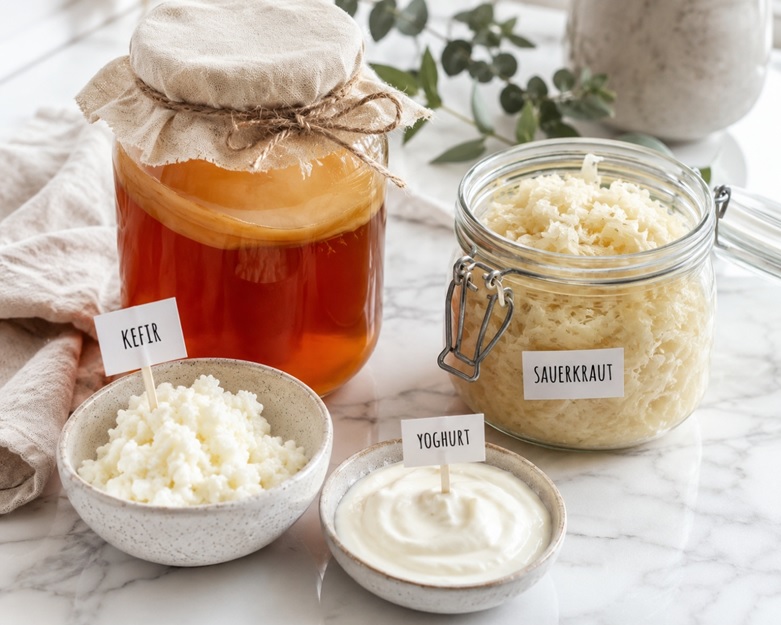
Half of all Australian adults experience unpleasant gut symptoms on a regular basis. That’s not a minority problem — it’s the norm. And while the supplement aisle might be the first place many people look, a growing body of research points to something far older and more powerful: fermented foods.
Fermented foods Australia-wide are having a genuine moment. From inner-city cafes serving house-made kimchi to home kitchens bubbling away with kombucha SCOBYs, Australians are rediscovering what traditional cultures have known for centuries. Fermentation doesn’t just preserve food — it transforms it. It creates a living ecosystem of bacteria, yeasts, and organic acids that interact with your gut in ways no isolated probiotic capsule can fully replicate.
This guide covers everything you need to know: the science behind fermentation, the most popular fermented foods and what makes each one unique, how to get started at home, and why quality matters more than you might think.
What Exactly Happens When Food Ferments?
Fermentation is one of the oldest food preservation techniques on the planet. At its core, it’s the process by which microorganisms — primarily bacteria and yeasts — metabolise the sugars and starches in food, producing acids, alcohols, and gases as by-products.
There are two main categories worth understanding. Lacto-fermentation uses lactic acid bacteria (LAB) to lower the pH of a food, creating an acidic environment that inhibits harmful organisms and preserves the product. Sauerkraut, kimchi, kefir, and many traditional yoghurts are all lacto-fermented. Yeast-based fermentation, on the other hand, drives the production of alcohol and carbon dioxide — think kombucha, where a symbiotic culture of bacteria and yeast (SCOBY) ferments sweet tea into a tangy, lightly effervescent drink.
What makes fermented foods nutritionally interesting is that the fermentation process doesn’t just add microorganisms. It also breaks down anti-nutrients, increases the bioavailability of minerals, produces short-chain fatty acids, and creates a range of bioactive compounds that interact with the immune system and gut lining. You’re not just eating more bacteria — you’re eating transformed food.
Kombucha: The Fermented Tea Taking Australia by Storm
Walk into any health food store across the country and you’ll find rows of bottled kombucha. But not all kombucha is created equal — and the gap between a commercially produced, pasteurised version and a properly brewed, live culture kombucha is significant.
Kombucha starts with a SCOBY — a rubbery, disc-shaped mat of bacteria and yeast — which ferments sweet black or green tea over 7–14 days. The result is a tart, slightly fizzy drink rich in organic acids (glucuronic acid, acetic acid), B vitamins, and live cultures. In Australia, kombucha starter cultures and kombucha SCOBYs are widely used by home brewers who want full control over the fermentation process, sugar content, and flavour profile.
Brewing your own kombucha also means you can undertake a second fermentation — adding fruit, ginger, or herbs to the bottled kombucha and allowing natural carbonation to develop. The result is a complex, naturally sparkling drink that bears little resemblance to the sugar-heavy commercial alternatives.
For those just getting started, a kombucha starter kit provides everything needed: the SCOBY, a starter liquid, and guidance on the fermentation process. It’s a genuinely accessible way to introduce living food into daily life.
Kefir: The Ancient Fermented Milk with Modern Science Behind It
Kefir is arguably the most microbiologically complex fermented food in common use. Unlike yoghurt, which typically contains 2–7 bacterial strains, traditionally made milk kefir can contain 30–50 different species of bacteria and yeast — including well-studied strains of Lactobacillus, Bifidobacterium, and Leuconostoc.
Kefir is made by adding live kefir grains — not the cereal grain, but a symbiotic matrix of bacteria and yeast in a polysaccharide structure called kefiran — to fresh milk. Over 24–48 hours, the culture ferments the milk into a tangy, probiotic-rich drink. Kefir starter cultures are reusable indefinitely when properly cared for, making them one of the most sustainable and cost-effective ways to produce fermented foods at home.
Research published in Frontiers in Microbiology has highlighted kefir’s potential to modulate gut microbiota composition, support immune function, and even demonstrate antimicrobial properties. One particularly notable benefit is that the fermentation process breaks down much of the lactose in milk, meaning many people who are lactose-intolerant can tolerate kefir well — though individual responses vary.
Water kefir is an alternative for those avoiding dairy — the same general process, but using water kefir grains with sugar water or coconut water as the fermentation base.
Live Yoghurt Cultures: Beyond the Supermarket Aisle
Most yoghurts sold in Australian supermarkets are pasteurised after fermentation — meaning the live cultures that gave them their probiotic properties are largely dead by the time you eat them. It’s one of the more frustrating ironies of the modern food system.
Making your own yoghurt from a live yoghurt culture changes the equation entirely. Traditional yoghurt cultures — including Finnish viili, Scandinavian filmjolk, Bulgarian yoghurt, and others — produce genuinely living products with intact microbial communities. Some of these heritage cultures also produce distinctly different textures and flavour profiles to commercial yoghurt, which is itself an interesting gateway to understanding how different bacterial strains behave.
Specialty yoghurt cultures have also gained attention for their therapeutic potential. L. reuteri yoghurt, made by fermenting a probiotic strain at a precise temperature for an extended period, has been extensively researched by gastroenterologist Dr William Davis. And SIBO yoghurt protocols using specific Lactobacillus strains have been developed for people managing small intestinal bacterial overgrowth. These are niche applications, but they illustrate just how much precision is possible when you move beyond the standard commercial offering.
Probiotics: The Science Behind the Supplement
Fermented foods are the original probiotics. But in recent decades, scientists have isolated specific bacterial strains, characterised their mechanisms of action, and begun testing them in clinical trials. The result is a category of targeted probiotic supplements that complement — rather than replace — a fermented food diet.
The term ‘probiotics’ refers to live microorganisms which, when administered in adequate amounts, confer a health benefit on the host. That’s the World Health Organisation definition, and it matters — because it tells you that not all products marketed as probiotics actually qualify. The strain has to be alive, present in sufficient quantity (typically billions of colony-forming units, or CFU), and has to have demonstrated benefit in human studies. Quality probiotic supplements will specify strains by genus, species, and designation (e.g., Lactobacillus rhamnosus GG), rather than just listing ‘Lactobacillus’ and moving on.
Australia’s TGA (Therapeutic Goods Administration) classifies probiotic supplements as AUST L Listed Medicines, which means they’ve met minimum manufacturing and safety standards — but they haven’t necessarily been assessed for therapeutic efficacy. That’s why reading the research behind specific strains is so important, particularly for people managing specific health conditions.
Getting Started with Fermented Foods at Home
The barrier to entry for home fermentation is lower than most people assume. Kombucha requires little more than a glass jar, a SCOBY, and some tea. Kefir can be ready in 24 hours. Even sauerkraut — just cabbage and salt — requires nothing more than a clean container and patience.
That said, quality of starting materials matters. Using organic cultures, filtered or dechlorinated water, and organic ingredients where possible reduces the risk of contamination and produces a more complex, flavourful end product. Temperature also plays a significant role — most lacto-fermented foods do best between 20°C and 24°C, while kefir and yoghurt cultures have their own specific requirements.
For anyone serious about home fermentation, investing in a basic fermentation toolkit — mason jars with airlock lids, a good thermometer, and a dedicated fermentation vessel — makes the process significantly more reliable and enjoyable.
Australia has a genuinely thriving fermentation community, with online groups, workshops, and specialist retailers providing support and guidance. Whether you’re looking to start with a kombucha starter kit or working your way through a full fermentation curriculum, the resources available today are extraordinary compared to even a decade ago.
Why Diversity Matters More Than Any Single Fermented Food
One of the clearest findings in microbiome research is that microbial diversity correlates strongly with gut health outcomes. A gut with hundreds of bacterial species is generally more resilient and functional than one dominated by a narrow range. This means that eating a variety of fermented foods — rather than relying on one — is almost always the better strategy.
Combining kefir (a complex multi-strain culture), kombucha (yeast and bacterial co-fermentation), fermented vegetables (LAB-dominant), and a targeted probiotic supplement creates a layered approach to microbiome support. Each source introduces different strains, substrates, and metabolites. That diversity feeds itself.
Pairing fermented foods with a diet rich in plant-based fibre — the prebiotic substrate that gut bacteria ferment for energy — amplifies the benefit further. It’s not just about adding bacteria; it’s about creating the conditions in which diverse microbial communities can thrive.
Conclusion
Fermented foods are not a wellness trend. They’re a return to something fundamental — the recognition that living food and living gut ecosystems are inseparable. For Australians navigating a food environment dominated by processed, pasteurised, and lifeless products, fermentation offers a practical, evidence-based path back to genuine gut health.
Whether you start with a jar of kombucha on your kitchen bench or a dedicated multi-culture kefir practice, the science is clear: diversity, consistency, and quality of fermented foods are among the most powerful dietary choices you can make for your microbiome.