

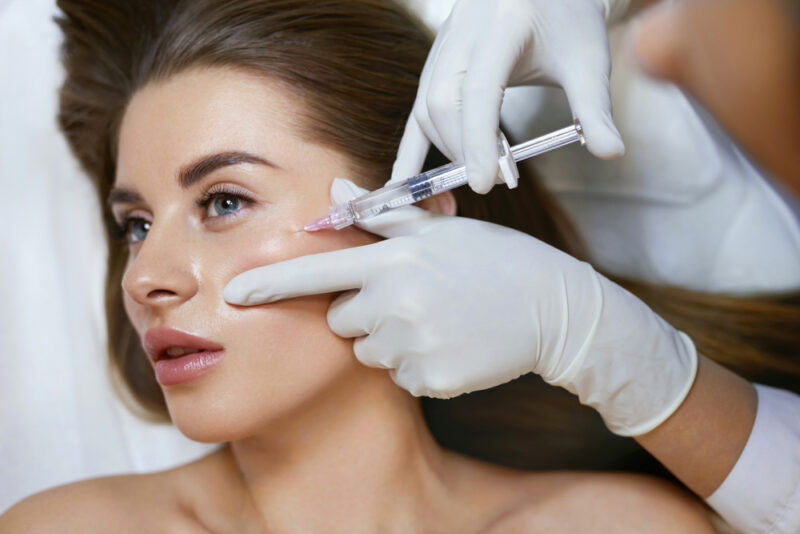
Cheek treatment is not simply about adding more volume. The cheeks influence facial proportions, support and the transition between the mid-face and lower face, which is why product selection and placement matter. Someone searching for the best dermal filler for cheeks will usually get a more useful answer from a personalised facial assessment than from choosing one brand based on popularity alone.
Start With Facial Structure, Not The Syringe
Two patients asking for cheek filler may need completely different treatment plans. One may have naturally flatter cheekbones and want more definition, while another may have experienced age-related volume changes. The amount, location and type of filler used should reflect those differences.
A practitioner should assess the face from several angles and look at overall proportions rather than treating the cheek as an isolated area. Adding too much volume can make the face look heavy or unnatural, particularly when the surrounding areas have not been considered.
The patient’s own preference matters too. Some want subtle restoration, while others are looking for stronger contour. The consultation should establish that goal before product choice or quantity is discussed.
Different Fillers Behave Differently
Dermal fillers vary in characteristics such as firmness, flexibility and how they integrate with tissue. Those differences can make one product more appropriate for a particular treatment objective than another.
A filler used to create stronger structural support may not be the same type chosen for a softer or more mobile area. That is why asking only which brand is “best” can oversimplify the decision. Several established products may be suitable when used correctly.
The practitioner should be able to explain why they prefer a particular product for the planned area and result. Patients do not need a technical lecture, but they should understand the basic reasoning behind the recommendation.
More Product Does Not Automatically Mean A Better Result

Cheek filler can have a noticeable effect on facial balance, so restraint is important. Adding volume gradually often gives the practitioner more control and allows the patient to assess the change before committing to more.
This is especially relevant for first-time patients. Starting conservatively can help avoid a result that feels unfamiliar or overdone. It also allows the treatment to be reviewed once swelling has settled.
Patients should remember that immediate appearance is not the final result. Temporary swelling or tenderness may make the area look different during the first few days, so judging the outcome too early can be misleading.
Safety And Aftercare Should Be Part Of The Conversation
Filler treatment involves medical risk, so choosing an appropriately trained practitioner is important. Patients should ask about product authenticity, practitioner experience, expected side effects and what happens if a complication is suspected.
Aftercare should be explained clearly. The clinic should tell patients what level of swelling or bruising may be normal, what activities to avoid temporarily and when urgent review is necessary.
The best cheek filler is therefore not simply a product name. It is the right product, used in the right amount, in the right place, for a patient whose goals and anatomy have been properly assessed.